
Orthodontic problems rarely correct themselves, and the window to address many of them most effectively is during childhood, when the jaw is still actively growing and treatment can work with the body’s natural development rather than against it. Parents often assume orthodontics begins with braces in the early teen years, but the reality is that some of the most meaningful treatment happens years before a child’s permanent teeth have fully come in.
At Little Bytes Pediatric Dentistry in Palo Alto, our pediatric dental services include a complete orthodontic program designed to meet children at every stage of development. Dr. Michelle Haghpanah and Dr. Reena Grover provide early orthodontic evaluation and interceptive treatment for younger children, and Dr. Zachary Hollander, a board-certified orthodontist and Diplomate of the American Board of Orthodontics, provides comprehensive braces and aligner treatment at both our Palo Alto and San Jose locations. Families throughout Palo Alto, Menlo Park, Los Altos, and Atherton receive coordinated care under one roof from providers who know their child at every stage.

The American Association of Orthodontists recommends that every child have a first orthodontic check-up no later than age 7. At this age, children typically have a mix of primary and permanent teeth that gives an orthodontist enough information to evaluate jaw growth patterns, identify developing bite problems, and determine whether early treatment would produce a meaningfully better outcome. An early evaluation does not always result in immediate treatment. For many children, the outcome is simply that our team monitors their development and intervenes at the right time. For others, starting treatment before all permanent teeth have come in produces results that would be significantly harder to achieve later.
Early evaluation is worth scheduling if you notice any of the following. Mouth breathing during the day or night, crowded or overlapping teeth, a crossbite where upper and lower teeth do not meet properly, early or delayed loss of baby teeth, thumb sucking or pacifier use beyond age four, a jaw that shifts or produces clicking sounds, and difficulty chewing or biting are all worth discussing with our team. These observations do not necessarily mean treatment is needed, but they are signals that an evaluation would provide useful information.
A dental space maintainer is an appliance that preserves adequate space for permanent teeth to grow in after losing a baby tooth too early. When a primary tooth is lost prematurely due to decay or trauma, neighboring teeth can drift into the empty space, blocking the path for the permanent tooth.
Space maintainers prevent this crowding by holding the space open until the permanent tooth is ready to erupt. These custom-made appliances are typically made of metal or acrylic and are designed to fit comfortably in your child’s mouth. Our pediatric dentists in Palo Alto will monitor the space maintainer regularly to ensure it functions properly.
Without a space maintainer, premature tooth loss can lead to significant orthodontic problems, including crowding, impacted teeth, and the need for tooth extractions to create space. By preserving the natural space, we help permanent teeth erupt in their correct positions.
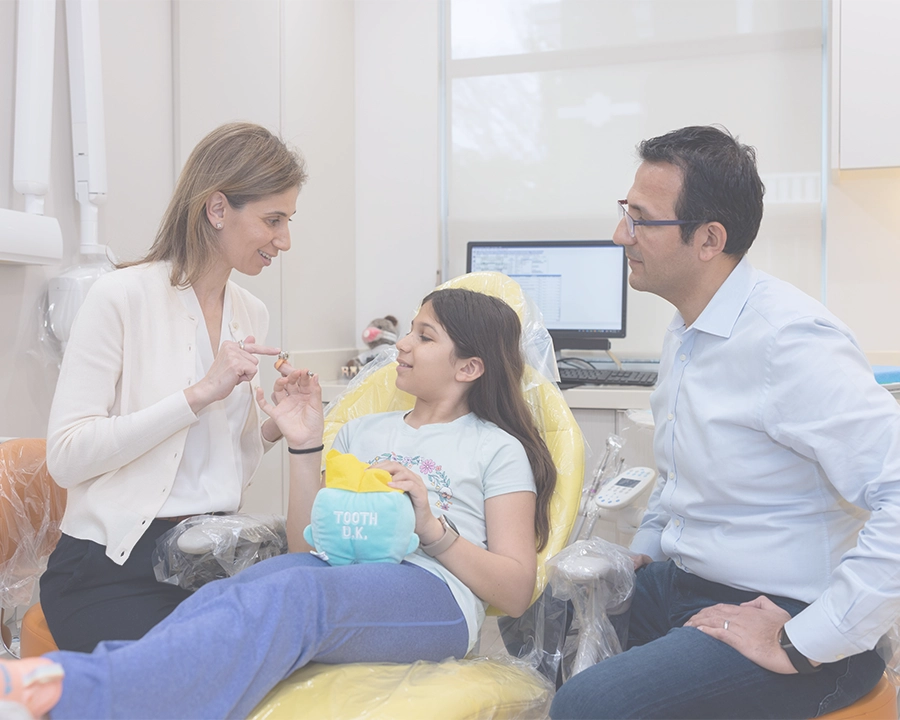
An oral habit appliance is a device that is used to help children stop sucking their thumbs. These appliances are also called habit-breaking appliances and are usually made from metal. A habit appliance is placed on the inside of the front teeth and resembles a metal retainer.
Thumb sucking and prolonged pacifier use can cause significant orthodontic problems, including protruding front teeth, open bites, and narrowed upper jaws. While many children naturally stop these habits on their own, some need additional support to break the pattern.
Habit-breaking appliances work by creating a physical reminder that discourages the habit without causing discomfort. The appliance makes thumb sucking less satisfying, helping children break the habit more quickly. Most children adapt to the appliance within a few days and successfully eliminate the habit within a few months.
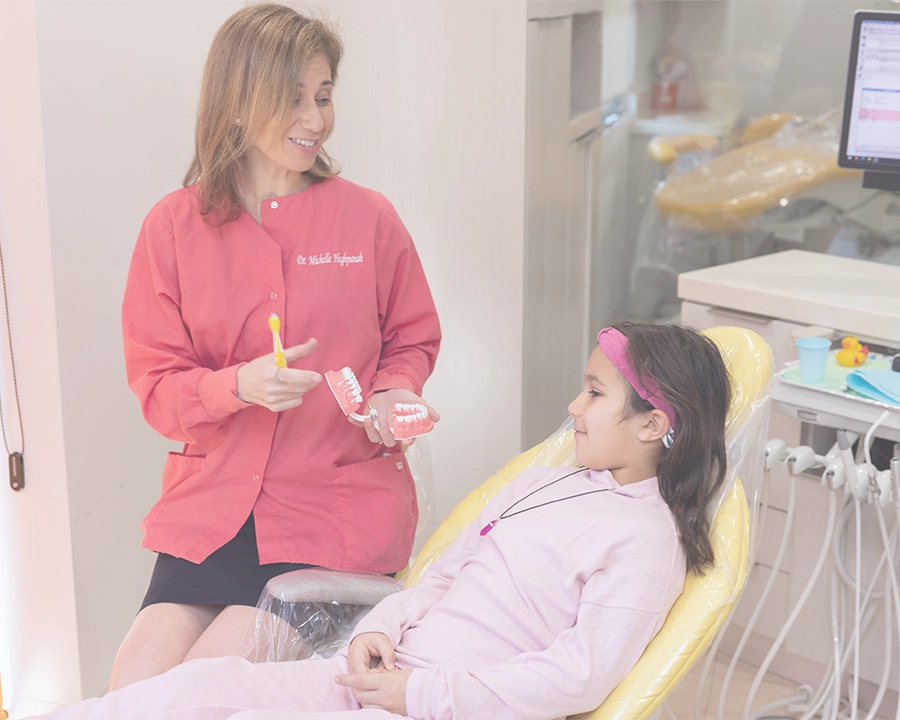
HealthyStart is a custom myofunctional treatment available in Palo Alto at Little Bytes, where our pediatric dentists use this method to help your child’s teeth and jaw develop properly and treat sleep-disordered breathing.
The HealthyStart system uses a series of custom-made oral appliances worn during sleep to guide proper development of the airway, jaw, and dental arches. This innovative approach addresses the root causes of crooked teeth, crowding, and sleep breathing disorders in children.
Many children experience sleep-disordered breathing, which can affect their growth, behavior, and academic performance. Symptoms include snoring, mouth breathing, restless sleep, bedwetting, and daytime fatigue. HealthyStart appliances help open the airway naturally by promoting proper jaw development and nasal breathing.
The system is designed for children ages 2 to 12 and works best when started early. Treatment involves wearing a series of soft, comfortable appliances that gradually guide the teeth and jaws into proper alignment. Most children adapt quickly to wearing the appliance at night and experience noticeable improvements in their breathing and sleep quality.
The following table summarizes the primary orthodontic approaches we offer, the age ranges they are most relevant for, and what each one addresses.
| Treatment | Typical Age Range | What It Addresses |
|---|---|---|
| HealthyStart | Ages 2 to 12 | Airway development, sleep-disordered breathing, jaw growth, early crowding |
| Interceptive orthodontics / palatal expanders | Ages 6 to 10 | Crossbites, narrow arches, jaw discrepancies while mixed dentition is present |
| Habit-breaking appliances | Ages 4 to 8 | Thumb sucking, prolonged pacifier use affecting jaw and bite development |
| Space maintainers | As needed after early tooth loss | Preserving arch space for incoming permanent teeth |
| Traditional metal braces | Ages 10 and up | Full alignment correction, crowding, spacing, bite issues |
| Invisalign and clear aligners | Teens and older children | Mild to moderate alignment in patients who can manage removable aligners |
Each treatment has a window of optimal timing, which is why consistent evaluation matters throughout childhood rather than waiting until a problem becomes obvious.
Early orthodontic treatment, sometimes called Phase 1 or interceptive orthodontics, refers to treatment that begins while a child still has primary teeth or is in the mixed dentition stage. The goal is to address conditions that will not improve on their own and that become significantly more complex to treat once all permanent teeth are in place.
The HealthyStart program is a myofunctional appliance system designed for children ages 2 to 12. It uses a series of soft, removable appliances worn primarily during sleep to guide the development of the airway, jaw, and dental arches. HealthyStart is particularly relevant for children who show signs of sleep-disordered breathing, including snoring, mouth breathing, restless sleep, and daytime fatigue. By supporting proper nasal breathing and jaw development early, it addresses the structural root causes of these patterns rather than managing their symptoms. Many children who complete HealthyStart treatment require less extensive orthodontic care in their teen years as a result of the foundational development work done during the early years.
Thumb sucking and prolonged pacifier use beyond age four can exert sustained pressure on developing teeth and jaw structures, leading to protruding front teeth, open bites, and narrowing of the upper arch. When these habits persist despite other strategies, a habit-breaking appliance provides a fixed reminder that discourages the habit without causing discomfort. Most children eliminate the habit within a few months of appliance placement, preventing the continued orthodontic impact that prolonged thumb sucking would otherwise cause.
When a primary tooth is lost earlier than expected due to decay or trauma, the adjacent teeth can drift into the gap and reduce the space available for the permanent tooth to erupt correctly. A space maintainer holds that gap open until the permanent successor is ready to emerge, preventing crowding and the bite problems that follow. Space maintainers are one of the most straightforward preventive orthodontic interventions available and can avoid the need for extractions or more complex alignment treatment later.
When a child is ready for comprehensive orthodontic treatment, Dr. Zachary Hollander provides full braces and clear aligner care through our pediatric orthodontics program. Traditional metal braces remain highly effective for correcting complex alignment issues, bite problems, and significant crowding. Invisalign and clear aligner systems offer an alternative for teens and older children with mild to moderate alignment concerns who prefer a less visible option. Dr. Hollander evaluates each patient individually and recommends the approach that will produce the most predictable, lasting result for that child’s specific case.
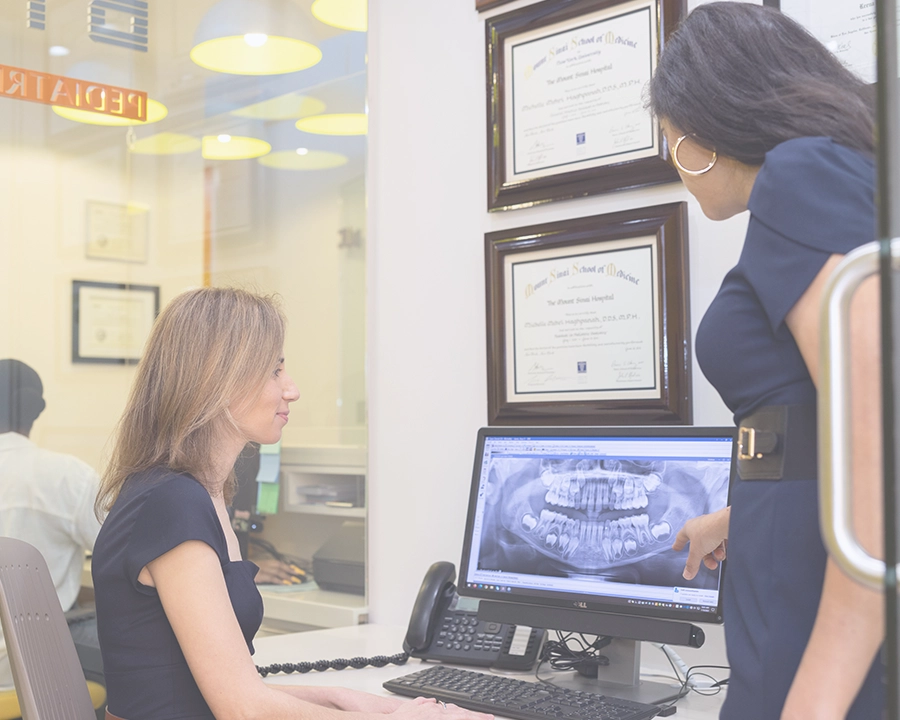
Early orthodontics, also called interceptive or Phase 1 orthodontics, takes place while a child still has primary teeth or a mix of primary and permanent teeth, typically between ages 6 and 10. The goal is to correct jaw growth patterns, expand narrow arches, and address bite problems while the jaw is still developing and more responsive to treatment. Regular orthodontics, or Phase 2 treatment, addresses tooth alignment after most or all permanent teeth have come in, typically in the early teen years. Some children need both phases; others benefit enough from early treatment that Phase 2 is shorter or not required.
Not necessarily, but early treatment often reduces the complexity and duration of any braces treatment needed later. For some children, early intervention corrects the underlying jaw issue enough that Phase 2 treatment is much shorter than it would have been otherwise. For others, it prevents conditions from worsening in ways that would require more involved correction down the road. Our team gives each family an honest picture of what to expect at every stage.
The American Association of Orthodontists recommends a first orthodontic check-up no later than age 7. At Little Bytes Pediatric Dentistry, our team evaluates orthodontic development as part of routine pediatric dental care, so many children are being assessed at every visit well before age 7. If we observe a pattern that warrants earlier attention, we will flag it and discuss the options clearly.
Yes. The development of the airway, nasal passages, and jaw structures are closely connected. Mouth breathing, snoring, and sleep-disordered breathing in children are often related to how the jaw and airway are developing. The HealthyStart program specifically addresses these connections, using myofunctional appliances to guide jaw growth in ways that support proper nasal breathing and airway function. If your child shows signs of sleep-disordered breathing, an early orthodontic evaluation is worth scheduling to understand whether there is a structural component that can be addressed during the growth years.
Please complete and submit the form and a member of our staff will contact you shortly.
"*" indicates required fields
Location & Hours
We use cookies to improve your experience on our site. By using our site, you consent to cookies.
Manage your cookie preferences below:
Essential cookies enable basic functions and are necessary for the proper function of the website.
CloudFlare provides web performance and security solutions, enhancing site speed and protecting against threats.
Service URL: developers.cloudflare.com (opens in a new window)
These cookies are needed for adding comments on this website.
Google reCAPTCHA helps protect websites from spam and abuse by verifying user interactions through challenges.
Google Tag Manager simplifies the management of marketing tags on your website without code changes.
Statistics cookies collect information anonymously. This information helps us understand how visitors use our website.
Google Analytics is a powerful tool that tracks and analyzes website traffic for informed marketing decisions.
Service URL: policies.google.com (opens in a new window)
Marketing cookies are used to follow visitors to websites. The intention is to show ads that are relevant and engaging to the individual user.
Google Maps is a web mapping service providing satellite imagery, real-time navigation, and location-based information.
Service URL: policies.google.com (opens in a new window)