
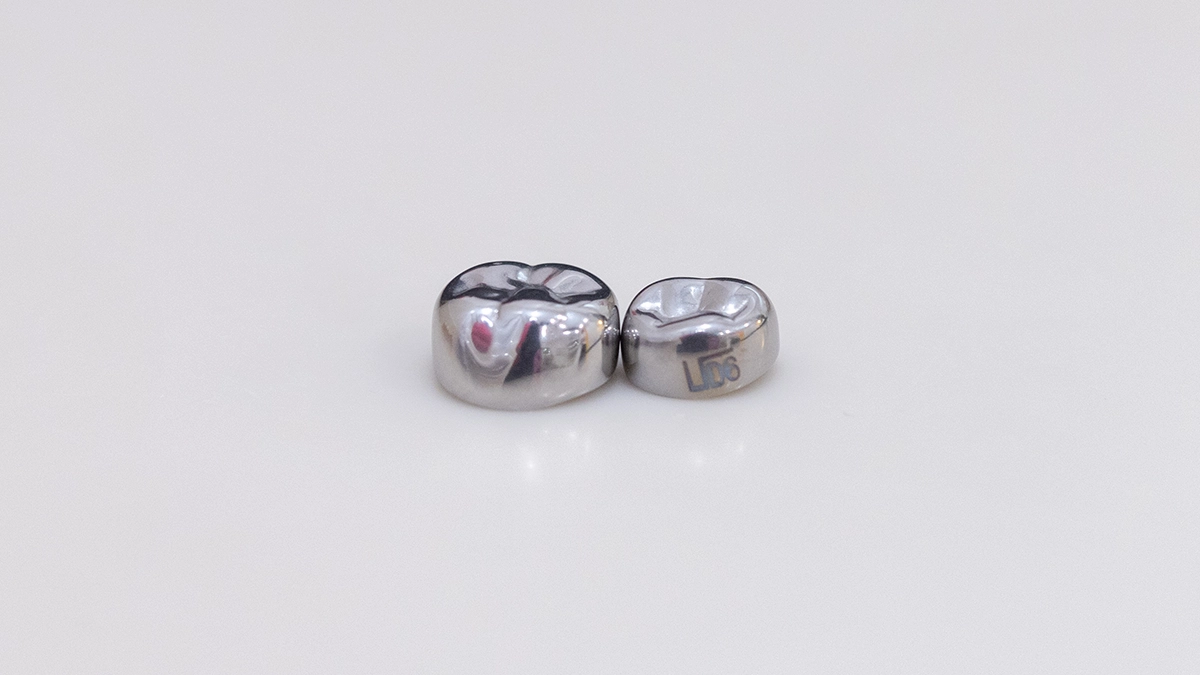

The idea of a crown on a baby tooth raises an immediate question for most parents: does this mean drilling, needles, and a difficult appointment? With the Hall crown technique, the answer for most children is no. The Hall technique is a method of placing a stainless steel crown over a decayed primary molar without drilling, without removing the cavity, and without a local anesthetic injection in the majority of cases.
The Hall technique works on a straightforward principle: rather than drilling out the decay and preparing the tooth for a crown in the conventional way, a stainless steel crown is fitted directly over the tooth as it is. The crown seals the cavity off from the bacteria, saliva, and nutrients that allow decay to progress. Without that environment, the decay process stops. The affected tissue remains inside the tooth, but it is effectively frozen in place and no longer grows or causes harm.
The procedure itself is brief. Our team selects a stainless steel crown that fits the tooth, seats it, and cements it in place. The child bites down on a separator for a short time to create enough space for the crown to fit properly between the teeth. In many cases, no injection is needed. There is no drilling sound, no vibration, and no extended time in the chair. Most children tolerate the Hall technique significantly better than conventional crown preparation, which is a meaningful clinical advantage when working with young patients.
The Hall technique is often used in combination with silver diamine fluoride. SDF is applied first to arrest decay and harden the affected tissue, then the Hall crown is placed over the treated tooth to seal and protect it. The crown also covers the black staining that SDF causes, addressing the cosmetic concern while reinforcing the clinical outcome. Laser dentistry may also be used alongside the Hall technique when soft tissue preparation or additional cavity treatment is needed in the same appointment.
| Hall Crown Technique | Traditional Crown Preparation | |
|---|---|---|
| Drilling required | No | Yes |
| Anesthesia injection typically needed | No | Yes |
| Decay removed before placement | No — sealed under crown | Yes |
| Time in chair | Short, often under 30 minutes | Longer — 45 to 60 minutes typically |
| Material | Stainless steel | Stainless steel, zirconia, or composite strip crown |
| Best for | Primary molars, young or anxious children, cooperative challenges | Deep decay near the nerve, permanent teeth, aesthetic priority cases |
| Evidence base | Over 90% success rate in clinical studies | Long-established standard of care |
| Risk of post-procedure discomfort | Very low | Moderate — numbing, sensitivity during recovery |
The comparison is not about one approach being universally superior. It is about matching the right method to the clinical situation and the child. The Hall technique is well suited to the majority of primary molar cavities and is particularly valuable when the child’s age, anxiety level, or cooperation makes conventional preparation impractical. When decay has reached the nerve or when the tooth requires pulp treatment before crown placement, traditional methods are more appropriate. Our team evaluates every case individually and explains the recommendation clearly before any treatment begins. For situations requiring a more involved approach, pediatric restorative dentistry options including conventional crowns, fillings, and pulp treatments are all available at Little Bytes Pediatric Dentistry.
The Hall technique works on a straightforward principle: rather than drilling out the decay and preparing the tooth for a crown in the conventional way, a stainless steel crown is fitted directly over the tooth as it is. The crown seals the cavity off from the bacteria, saliva, and nutrients that allow decay to progress. Without that environment, the decay process stops. The affected tissue remains inside the tooth, but it is effectively frozen in place and no longer grows or causes harm.
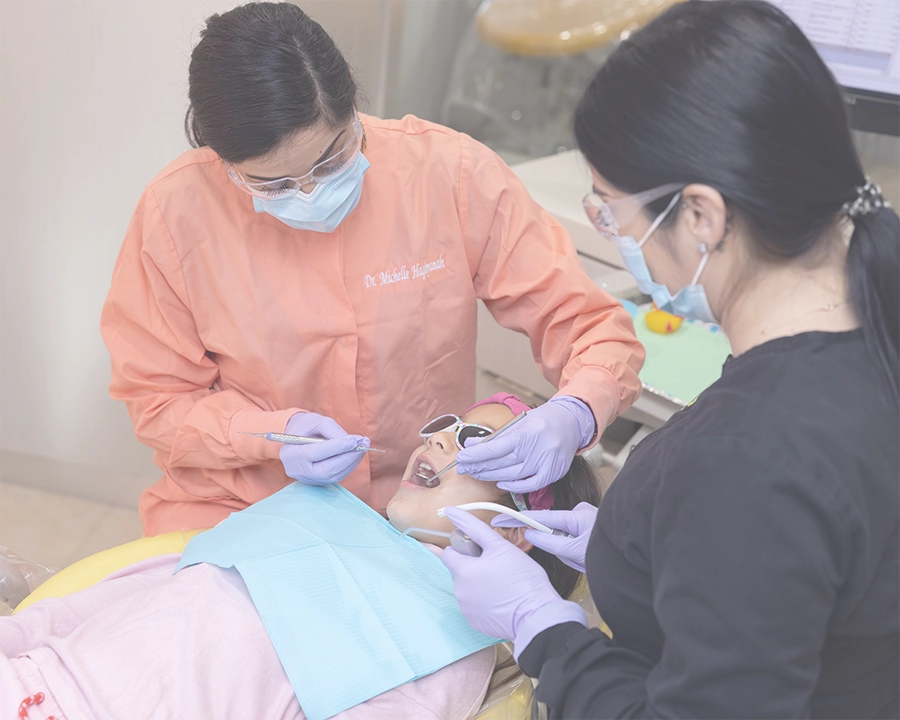
The procedure itself is brief. Our team selects a stainless steel crown that fits the tooth, seats it, and cements it in place. The child bites down on a separator for a short time to create enough space for the crown to fit properly between the teeth. In many cases, no injection is needed. There is no drilling sound, no vibration, and no extended time in the chair. Most children tolerate the Hall technique significantly better than conventional crown preparation, which is a meaningful clinical advantage when working with young patients.
The Hall technique is often used in combination with silver diamine fluoride. SDF is applied first to arrest decay and harden the affected tissue, then the Hall crown is placed over the treated tooth to seal and protect it. The crown also covers the black staining that SDF causes, addressing the cosmetic concern while reinforcing the clinical outcome. Laser dentistry may also be used alongside the Hall technique when soft tissue preparation or additional cavity treatment is needed in the same appointment.
Hall crowns require no special maintenance beyond standard oral hygiene. Brushing twice daily and flossing around the crown to keep the gumline clean are the primary requirements. Sticky and chewy foods should be avoided in excess, as with any crown, to reduce the risk of loosening the cement over time. If the crown ever feels loose, comes off, or causes discomfort, contact our office promptly rather than waiting for the next scheduled appointment.
Continuing preventive dental care every six months is important after a Hall crown is placed, both to monitor the crown and to protect the remaining teeth from new decay. A Hall crown treats the affected tooth effectively, but it does not change the underlying cavity risk for the rest of the mouth.

Studies have determined that this technique has a success rate of over 90%! It has proved to be comparable to traditional dental crown techniques. However, its success depends on how much tooth decay is present and the at-home oral habits of the patient.
Want to leverage the best minimally invasive dentistry for kids in Palo Alto to protect your child’s teeth?
For most children, the Hall technique involves little to no discomfort. Because no drilling is done and no injection is typically needed, the experience is significantly less stressful than conventional crown preparation. Your child may feel some pressure during crown placement and slight bite awareness for a few days afterward while the jaw adjusts, but this is normal and resolves on its own.
Yes. The Hall technique does not remove the decay — it seals it. The stainless steel crown creates a complete seal that cuts off the bacteria causing the decay from the environment they need to survive. Research consistently shows that decay arrested in this way does not progress under a well-fitted Hall crown. The tooth remains protected until it falls out naturally.
In most cases, no. The absence of drilling means that local anesthetic is not needed for the majority of Hall crown placements. There are situations where the tooth is sensitive enough or the procedure involves additional treatment that warrants an injection, and our team is transparent about that before the appointment begins.
Yes. The Hall crown technique is indicated for primary molars — the back baby teeth. It is not appropriate for permanent teeth. For permanent teeth requiring crown coverage, conventional crown preparation is used. Our team clearly identifies which teeth are primary and which are permanent and explains which treatment applies before any work begins.
Please complete and submit the form and a member of our staff will contact you shortly.
"*" indicates required fields
Location & Hours
We use cookies to improve your experience on our site. By using our site, you consent to cookies.
Manage your cookie preferences below:
Essential cookies enable basic functions and are necessary for the proper function of the website.
CloudFlare provides web performance and security solutions, enhancing site speed and protecting against threats.
Service URL: developers.cloudflare.com (opens in a new window)
These cookies are needed for adding comments on this website.
Google reCAPTCHA helps protect websites from spam and abuse by verifying user interactions through challenges.
Google Tag Manager simplifies the management of marketing tags on your website without code changes.
Statistics cookies collect information anonymously. This information helps us understand how visitors use our website.
Google Analytics is a powerful tool that tracks and analyzes website traffic for informed marketing decisions.
Service URL: policies.google.com (opens in a new window)
Marketing cookies are used to follow visitors to websites. The intention is to show ads that are relevant and engaging to the individual user.
Google Maps is a web mapping service providing satellite imagery, real-time navigation, and location-based information.
Service URL: policies.google.com (opens in a new window)