

Medically reviewed by
Dr. Michelle Haghpanah, DDS, MPH
Board-Certified Pediatric Dentist
Dr. Michelle Haghpanah is a board-certified pediatric dentist dedicated to providing preventive, evidence-based dental care for infants, children, and adolescents. She earned her Doctor of Dental Surgery from New York University, a Master of Public Health from Yale University, and completed her pediatric dental residency at Mount Sinai Medical Center, where she served as Chief Resident. A former Associate Professor at the University of the Pacific with hospital privileges at Lucile Packard Children’s Hospital Stanford and Kaiser Santa Clara, Dr. Michelle reviews clinical content to ensure it reflects current pediatric dental guidelines, evidence-based practices, and clear, family-friendly information that helps parents make informed decisions about their child’s oral health.
Straight teeth aren’t just about a picture-perfect smile. They directly impact your child’s long-term oral health in ways that go far beyond appearance. Misaligned teeth create crowded spaces that are harder to clean, increasing the risk of cavities, gum disease, and even issues with chewing and jaw development. The good news? Early attention to alignment can prevent many of these problems from taking hold.
At Little Bytes Pediatric Dentistry in Palo Alto, Dr. Michelle Haghpanah, Dr. Grover, and Dr. Hollander take a proactive approach to pediatric orthodontics and overall oral health. Both board-certified pediatric dentists with privileges at Lucile Packard Children’s Hospital at Stanford and Kaiser Santa Clara, they understand that a straight smile in childhood lays the groundwork for a healthier mouth for life.
How Alignment Affects Oral Hygiene
Crooked or crowded teeth create pockets and overlapping surfaces where toothbrush bristles and floss simply cannot reach effectively. Plaque builds up in these tight spaces, and over time, that buildup can lead to decay and inflamed gums. Children are especially vulnerable because their brushing habits are still developing, making thorough cleaning of misaligned teeth even more challenging.
The Gum Health Connection
Research published in BMC Pediatrics found a meaningful link between misaligned teeth and quality of life. Misaligned teeth can affect more than a child’s smile. The more severe the issue, the more it can interfere with everyday things like eating, speaking, and feeling comfortable around others. When teeth do not fit together properly, certain areas can take on excessive pressure.
Over time, that can irritate the gums, affect the bone that supports the teeth, and make problems harder to correct later. Catching these issues early gives kids a better chance of avoiding more serious dental concerns down the road.
Bite Problems and Their Broader Impact
A bite issue can affect more than your child’s teeth. It can change the way they chew, speak, and sometimes even breathe. Overbites, underbites, and crossbites can also put extra stress on the jaw, which may lead to headaches or discomfort that does not seem connected to their teeth at first. When these problems are treated while the jaw is still growing, care is often simpler than it would be later on.
What Early Orthodontic Assessment Can Reveal
The American Association of Orthodontists recommends that children have their first orthodontic evaluation by age 7. At this stage, a trained pediatric dentist can identify emerging alignment issues before all permanent teeth have erupted, enabling guidance that directs jaw growth in the right direction. This doesn’t mean every child needs braces at 7, but it does mean that problems are identified while the window for simpler intervention is still open.
Our prevention and education approach at Little Bytes emphasizes catching these issues early. During routine exams, we assess bite development, cavity risk, and gum health, giving parents a complete picture of where their child stands.
What Parents Can Watch For
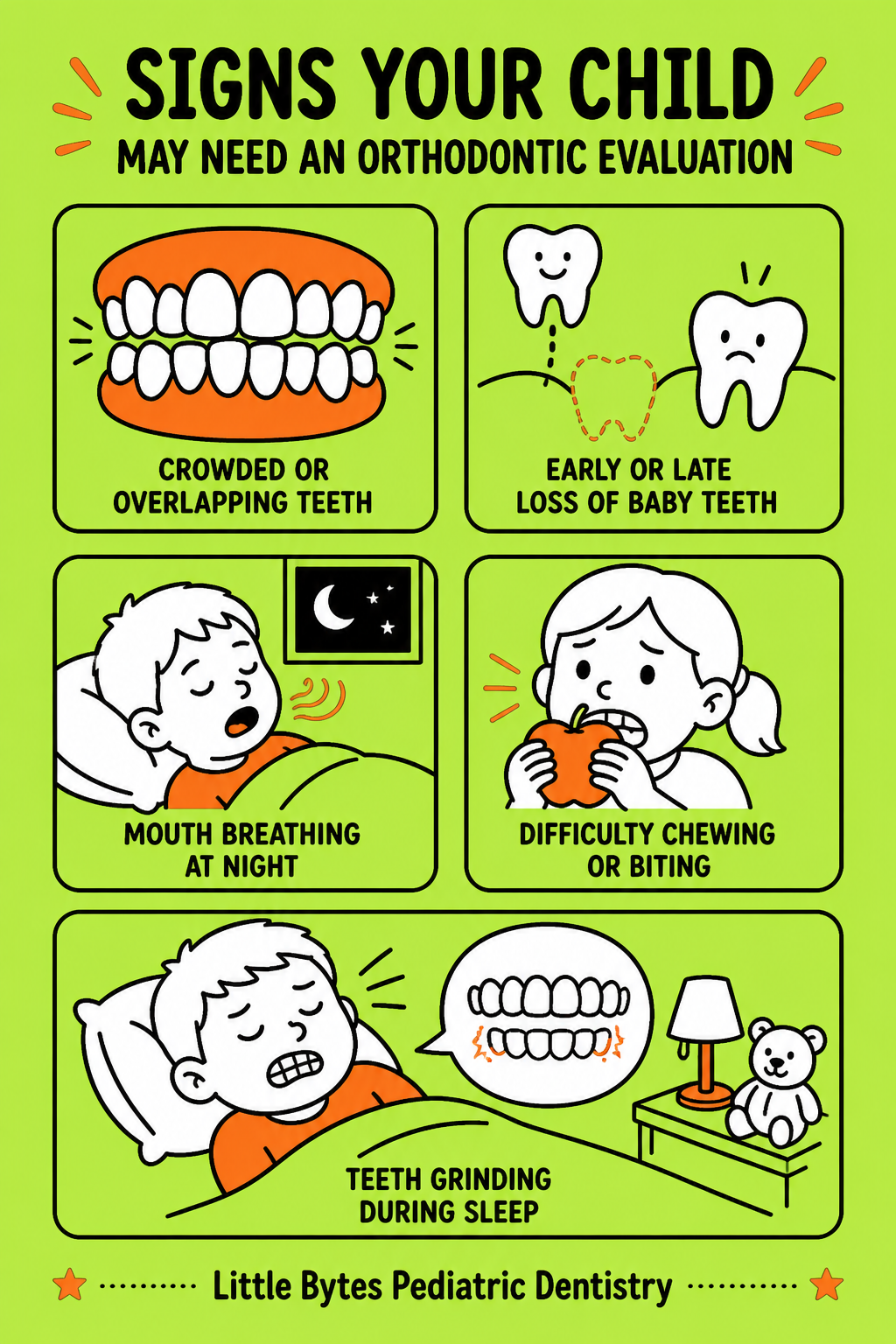
Several signs may indicate your child could benefit from an orthodontic evaluation sooner rather than later. While only a professional exam can confirm whether treatment is needed, these signals are worth noting:
- Crowded or overlapping teeth: Teeth that appear to be competing for space or pushing against each other.
- Early or late loss of baby teeth: Baby teeth that fall out significantly earlier or later than typical can affect how permanent teeth come in.
- Mouth breathing: If a child regularly breathes through their mouth, particularly while sleeping, it may indicate underlying airway issues or specific patterns of jaw development.
- Difficulty chewing or biting: Complaints about chewing certain foods or visible strain while eating.
- Teeth grinding: Clenching or grinding, particularly during sleep, can signal bite issues that need evaluation.
These signs don’t necessarily mean orthodontic treatment is imminent, but they’re good reasons to have a conversation with a pediatric dentist who can provide a clear, informed assessment.
Your Child’s Smile Starts Here at Little Bytes Pediatric Dentistry
At Little Bytes Pediatric Dentistry, our orthodontic services and early evaluations are designed to give parents the information they need without any unnecessary alarm or pressure. Dr. Michelle, Dr. Grover, and Dr. Hollander take the time to explain what they observe, what it means for your child’s development, and what next steps, if any, make sense. We combine the latest in minimally invasive dentistry with a warm, kid-friendly environment that makes every visit feel manageable, even for the most anxious young patients.
Whether your child is due for a routine exam or you’ve noticed some of the signs above, we’re here to help you make sense of it all. Our Palo Alto practice serves families across the Bay Area who want expert, thoughtful pediatric dental care from doctors who genuinely love what they do. Schedule your child’s appointment today and take the first step toward a lifetime of healthy, well-aligned smiles.