
How to Prevent The Top 5 Pediatric Dental Emergencies
Contents

Medically reviewed by
Dr. Michelle Haghpanah, DDS, MPH
Board-Certified Pediatric Dentist
Dr. Michelle Haghpanah is a board-certified pediatric dentist dedicated to providing preventive, evidence-based dental care for infants, children, and adolescents. She earned her Doctor of Dental Surgery from New York University, a Master of Public Health from Yale University, and completed her pediatric dental residency at Mount Sinai Medical Center, where she served as Chief Resident. A former Associate Professor at the University of the Pacific with hospital privileges at Lucile Packard Children’s Hospital Stanford and Kaiser Santa Clara, Dr. Michelle reviews clinical content to ensure it reflects current pediatric dental guidelines, evidence-based practices, and clear, family-friendly information that helps parents make informed decisions about their child’s oral health.
Medically Reviewed by Dr. Reena Grover on July 19, 2026
We get roughly five types of between-appointment calls from parents. A knocked-out tooth. A chip or fracture. A swelling that appeared near a tooth. Something wrong with orthodontic hardware. A toothache that has been going on for a few days. These five account for most of the same-day situations we see at our Palo Alto practice. Knowing which one you’re dealing with changes how you respond in the first few minutes.
At Little Bytes Pediatric Dentistry, Dr. Michelle Haghpanah and Dr. Reena Grover both maintain privileges at Lucile Packard Children’s Hospital at Stanford and Kaiser Santa Clara and handle pediatric dental emergencies as a regular part of our practice. Here’s what to know about each of the five.
1. Knocked-Out Teeth
For a permanent tooth knocked completely out, the clock starts the moment it leaves the socket. Under 30 minutes from injury is the window where reimplantation success rates are meaningfully higher. An hour out, those numbers have already moved. By two hours, it rarely holds. The clock starts when it comes out, not when you walk in the door — which is why what happens in the first five minutes at the scene matters as much as anything we do at the office.
Pick it up by the crown, not the root. If there’s dirt on it, rinse with water — gently, not scrubbing. Keep it moist: in milk, in a small cup of the child’s saliva, or placed back into the socket if the child is old enough to hold it there without swallowing. Then call and drive. Tell us you’re coming so we can be ready.
Baby teeth: we don’t put those back. The risk to the permanent tooth forming underneath is too high. A call is still worthwhile to check whether surrounding gum tissue was damaged in the impact.
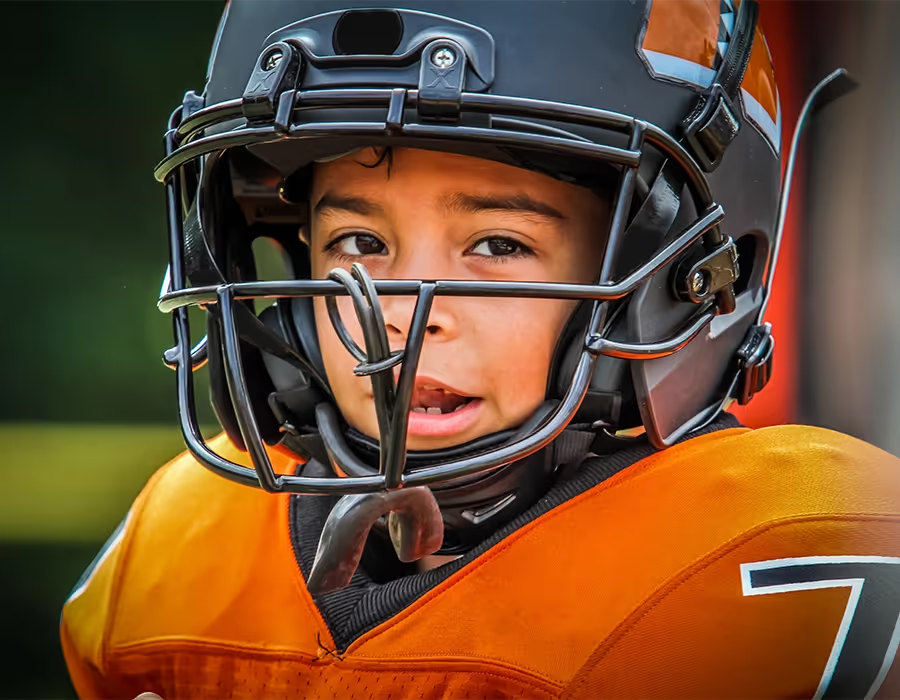
Most knocked-out teeth in kids trace back to sports without a mouthguard. Our sports guard guide walks through what a custom-fitted guard does during impact versus what a store-bought version does. A child playing contact sports without one is the most common denominator in these cases — soccer, basketball, martial arts, football.
2. Chipped or Broken Teeth
The question that moves this to same-day: is the inner tooth exposed? A small chip off the corner of a baby tooth, no pain, visible enamel only — that can wait for a regular appointment. A crack or fracture reaching the nerve of a permanent tooth: that’s today. Pain on biting or temperature sensitivity with a visible fracture into the inner pulp, we want to see it now.
If you find the broken piece, keep it — in milk or saliva — and bring it in. There are cases where the original fragment bonds back on, and when that’s possible it gives the best cosmetic and structural result. It’s worth the effort to save it.
We notice a pattern: children who chew on hard candy, ice, or pen caps chip teeth more often. Repeated stress on enamel finds fault lines, and eventually one of those incidents ends up in our emergency slot. Bruxism — grinding at night — does the same thing over a longer timeline. Catching grinding early and addressing it cuts into that fracture pattern. If your child grinds audibly or wakes up with jaw soreness, mention it at the next visit.
3. Dental Abscess and Tooth Infection
The infections that end up in our emergency schedule usually started as a cavity that nobody caught. The cavity reached the nerve, the nerve died, and the infection worked its way into the surrounding tissue. The swelling on the gum, the pimple-like bump near a tooth — those appear after the infection has been building for a while. Fever, swollen lymph nodes, or a child who won’t eat because of mouth pain are the markers that put this in same-day territory.
The part that concerns us about dental infections in kids is how fast they can move. There’s a pathway from a tooth to the jaw and neck, and a tooth infection can travel it. We take any swelling near a tooth seriously, especially when fever is also present. Tooth swelling plus fever on a Saturday night: that’s a call, not a Monday morning situation.
Treatment runs: antibiotics first to control the infection, then either a pulpotomy to preserve the tooth with the nerve removed, or an extraction, depending on which tooth it is and how far the infection has spread. We see it sooner, we have more options.
Prevention here is mostly about not letting cavities run. Cleanings are how we find the small ones before they’ve made it to the nerve. Our brushing habits guide has the at-home piece broken down by age — that daily consistency is what slows how fast cavities form.
4. Orthodontic Emergencies
A wire end that has shifted and is now jabbing the inside of the cheek is the call we get most often from kids in braces. Orthodontic wax, which comes in the kit most orthodontists hand out at the start of treatment, covers the sharp end. That’s usually enough to get through to a non-urgent appointment. An actual cut in the tissue or an open wound from the wire is same-day.
Second most common: a bracket that’s come loose. If it’s still hanging on the wire, leave it in place, call the orthodontist, and schedule a repair at the next available slot. If it has come completely free and the child could swallow it, take it out, keep it, bring it to the appointment. Neither situation requires emergency treatment unless there’s tissue damage involved.
The situation that does need same-day evaluation: a fall or impact while wearing braces. Hardware attached to teeth changes how force distributes through the mouth. A hit that would be minor without braces can cause tooth trauma with them. If a child takes an impact to the mouth during a game and they have orthodontic appliances in, we want to see them.
5. Toothaches That Come and Go
A child who mentions tooth pain once after something cold and then doesn’t bring it up again — probably transient sensitivity, not necessarily a problem. A child who has mentioned the same tooth two or three times, who is eating on one side, or who woke up with jaw or tooth pain at night — that’s a pattern we’d want to look at.
Parents sometimes tell us “it seemed to get better on its own.” That happens. What happened in those cases: the nerve in the tooth died. It stopped sending the signal — not because the tooth healed, but because nothing was left to send it. An infection can grow silently after that, with no pain warning, until swelling or fever brings it back to our attention. If a toothache lasted more than two days before stopping, that tooth is still worth an x-ray.
For pain management while waiting: children’s ibuprofen or acetaminophen at the appropriate dose, an ice pack held against the outside of the cheek for swelling. One thing that doesn’t help: aspirin applied directly to the gum. It doesn’t do what people think and can cause soft tissue burns. For an exposed nerve from a chip or fracture, dental wax covers it temporarily. None of this fixes the tooth. It gets you to the appointment.
Schedule at Little Bytes Pediatric Dentistry in Palo Alto
Dr. Haghpanah and Dr. Grover are both board-certified pediatric dentists with hospital privileges at Lucile Packard Children’s Hospital at Stanford and Kaiser Santa Clara. We see children from infancy through adolescence, and dental emergencies are a regular part of our practice. If your child has an injury or you have a concern about pain or swelling that’s developed, contact us at our Palo Alto office.
Frequently Asked Questions About Pediatric Dental Emergencies
Pick it up by the crown, not the root. Rinse gently with water if it’s dirty, but don’t scrub it. Keep it moist — in milk, in a container of the child’s saliva, or gently repositioned back into the socket if the child is old enough not to swallow it. Call us immediately. The reimplantation window is much better under 30 minutes than at 60, so time is the priority. For knocked-out baby teeth, don’t reimplant — call us and we’ll evaluate the site for other injuries.
Same-day situations: a knocked-out permanent tooth, a tooth fracture with nerve exposure or significant pain, any swelling near a tooth especially with fever, uncontrolled mouth bleeding, or trauma to the face with orthodontic hardware in place. Toothaches lasting more than two days, a loose permanent tooth, and chips that expose the inner part of the tooth all warrant a same-day call. When you’re not sure, call us — we’ll help you figure out how urgent it is over the phone.
Yes. If it lasted more than a couple of days before stopping, we’d still want to look at the tooth. Pain that resolves on its own sometimes means the nerve has died, not that the problem fixed itself. A tooth with a dead nerve can still develop an abscess — those tend to come back as swelling or fever rather than pain. Catching it with an x-ray at a routine appointment is much simpler than dealing with it once it’s progressed into the surrounding tissue.
Custom-fitted guards work better on two counts: protection and compliance. A guard that fits precisely stays in place during impact, which is how it protects. Store-bought guards tend to be bulkier and harder to breathe through, so kids take them out mid-game. For any child playing contact sports regularly, a custom guard is the single clearest prevention step we know of for knocked-out and fractured teeth.
Children’s ibuprofen or acetaminophen at the appropriate dose for weight and age can manage dental pain in the short term. An ice pack held against the outside of the cheek helps with swelling. For a chipped tooth with an exposed nerve, dental wax provides temporary coverage. One thing to avoid: aspirin applied directly to the gum tissue can cause soft tissue burns and doesn’t help with the pain. None of these fix the underlying problem, but they make the wait until we can see the child more manageable.
About the Author
Dr. Reena Grover
Little Bytes Pediatric Dentistry — Palo Alto, CA
Dr. Reena Grover is a board-certified pediatric dentist at Little Bytes Pediatric Dentistry in Palo Alto. She maintains privileges at Lucile Packard Children’s Hospital at Stanford and Kaiser Santa Clara and provides comprehensive pediatric dental care including emergency treatment, preventive care, and full-service dentistry for children from infancy through adolescence.