

Medically reviewed by
Dr. Michelle Haghpanah, DDS, MPH
Board-Certified Pediatric Dentist
Dr. Michelle Haghpanah is a board-certified pediatric dentist dedicated to providing preventive, evidence-based dental care for infants, children, and adolescents. She earned her Doctor of Dental Surgery from New York University, a Master of Public Health from Yale University, and completed her pediatric dental residency at Mount Sinai Medical Center, where she served as Chief Resident. A former Associate Professor at the University of the Pacific with hospital privileges at Lucile Packard Children’s Hospital Stanford and Kaiser Santa Clara, Dr. Michelle reviews clinical content to ensure it reflects current pediatric dental guidelines, evidence-based practices, and clear, family-friendly information that helps parents make informed decisions about their child’s oral health.
Getting your child fitted for braces is an exciting milestone, but it also comes with a learning curve for the whole family. Suddenly, there are new rules about what to eat, new tools to add to the bathroom routine, and new questions about what’s normal versus what warrants a call to the dentist. The good news is that keeping braces clean and your child’s teeth healthy throughout treatment is completely manageable once you know what to look for and what to do each day.
At Little Bytes Pediatric Dentistry, Dr. Michelle Haghpanah and Dr. Grover work closely with families throughout the Palo Alto area to make orthodontic care as smooth as possible. As board-certified pediatric dentists with deep roots in children’s oral health, they understand that successful braces treatment goes well beyond the orthodontist’s chair. It starts at home, with parents who feel confident and prepared.
Building a Daily Cleaning Routine
Braces create new nooks and surfaces where plaque and food debris can hide, which means the standard two-minute brushing routine needs a serious upgrade. Children with braces should brush after every meal and snack, not just morning and night. A soft-bristled toothbrush angled at 45 degrees, used both above and below the wire, helps dislodge debris that tends to build up around brackets.
Flossing with braces takes more effort, but it cannot be skipped. Floss threaders or orthodontic floss picks make it possible to navigate around the wire and get between each tooth. Good oral health habits established during braces treatment tend to stick with kids long after the hardware comes off, so this is worth the extra few minutes each evening.
Foods to Avoid During Treatment
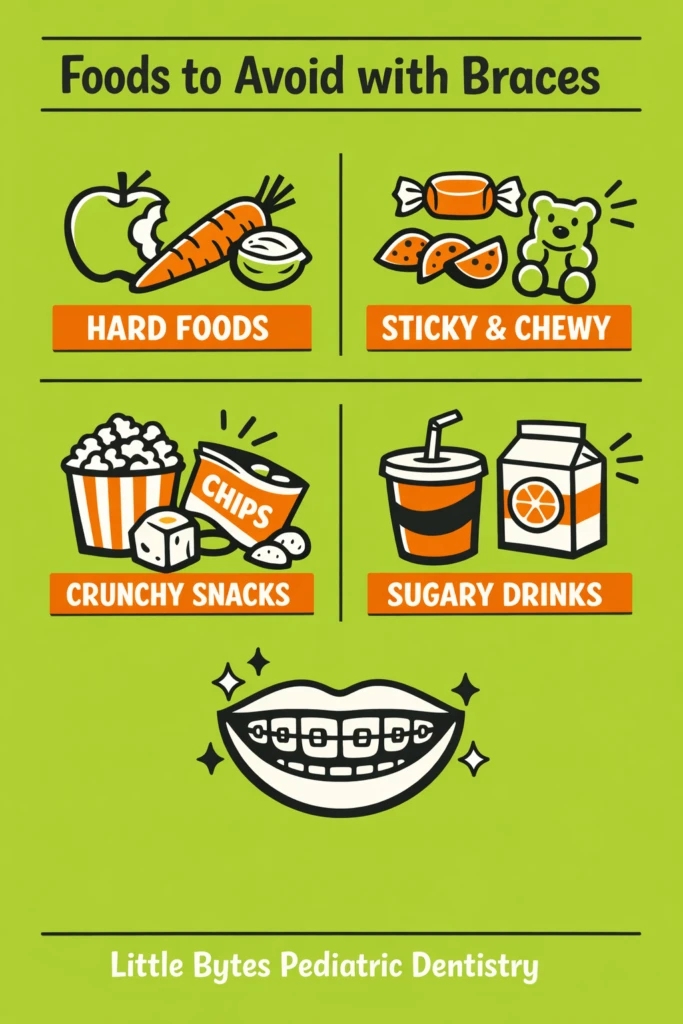
Diet changes are one of the biggest adjustments for kids in braces, and for good reason. Certain foods can bend wires, pop off brackets, or get so thoroughly stuck that no amount of brushing will remove them. Help your child understand why these limits matter by keeping the list concrete and consistent.
Foods to avoid during orthodontic treatment include:
- Hard foods like raw carrots, apples, nuts, and hard candies
- Sticky or chewy foods like gummy bears, caramel, taffy, and bagels
- Crunchy foods like popcorn, chips, and ice
- Sugary drinks like soda and juice, which accelerate decay around brackets
Softer alternatives are easy to find. Cooked vegetables, bananas, yogurt, pasta, and soft bread are all fair game and keep mealtimes from feeling too restrictive. The goal is not to make your child feel deprived, but to protect the investment you have both made in their smile.
What to Do When Something Feels Wrong
A loose bracket, a poking wire, or soreness after an adjustment are all common experiences during orthodontic treatment. Knowing how to handle these minor issues at home helps prevent unnecessary anxiety and keeps treatment on track.
If a wire is poking the inside of the cheek, a small piece of orthodontic wax applied over the sharp end can provide immediate relief until your child can be seen. A loose bracket that is still attached to the wire does not always require an emergency visit, but it should be reported to the practice so it can be assessed promptly. Persistent soreness after an adjustment is normal for the first day or two and can be managed with soft foods and over-the-counter pain relief as appropriate for your child’s age.
According to the American Association of Orthodontists, consistent at-home care is one of the most important factors in determining the success and length of orthodontic treatment. Skipping cleanings or ignoring minor issues can extend treatment time and create dental problems that outlast the braces themselves.
Keeping Up With Regular Dental Visits
Orthodontic appointments are not a replacement for routine dental checkups. In fact, children in braces need to stay on schedule with their dental exams and cleanings more than ever. Braces make it harder to clean thoroughly, which increases the risk of cavities, white spot lesions, and gum inflammation. Professional cleanings help remove buildup that even a diligent brusher cannot reach.
If your child is due for a checkup, do not wait until the braces come off. Staying proactive during treatment protects the teeth underneath, so the final result is as healthy as it is straight.
Little Bytes Pediatric Dentistry: Partners in Your Child’s Smile
At Little Bytes Pediatric Dentistry, we believe that great orthodontic outcomes start with great everyday care. Dr. Michelle and Dr. Grover are board-certified pediatric dentists who bring both clinical expertise and genuine warmth to every appointment, ensuring your child feels comfortable and confident at every stage of treatment. Our Palo Alto practice is designed with kids in mind, from the technology we use to the way we communicate with patients and their families.
Whether your child is preparing to get braces, is currently in treatment, or is navigating the retention phase, we are here to support their oral health every step of the way. If you have questions about your child’s braces care or would like to schedule a visit,reach out to our team today.