


Medically reviewed by
Dr. Michelle Haghpanah, DDS, MPH
Board-Certified Pediatric Dentist
Dr. Michelle Haghpanah is a board-certified pediatric dentist dedicated to providing preventive, evidence-based dental care for infants, children, and adolescents. She earned her Doctor of Dental Surgery from New York University, a Master of Public Health from Yale University, and completed her pediatric dental residency at Mount Sinai Medical Center, where she served as Chief Resident. A former Associate Professor at the University of the Pacific with hospital privileges at Lucile Packard Children’s Hospital Stanford and Kaiser Santa Clara, Dr. Michelle reviews clinical content to ensure it reflects current pediatric dental guidelines, evidence-based practices, and clear, family-friendly information that helps parents make informed decisions about their child’s oral health.
Most children wear braces for one to three years, but the exact length of treatment depends on several factors unique to each child’s smile. If you’ve been told your child needs braces and you’re wondering what the road ahead looks like, you’re not alone. It’s one of the most common questions parents ask after an orthodontic consultation.
At Little Bytes Pediatric Dentistry, our board-certified pediatric dentists, Dr. Michelle and Dr. Grover, and our orthodontist, Dr. Hollander, understand that planning matters for busy Bay Area families. That’s why we take the time to walk you through your child’s personalized treatment plan, so you understand not just what needs to happen, but how long it will take and why.
What Determines How Long Orthodontic Treatment Takes?
Several factors influence how quickly teeth move into their proper positions. Some children sail through treatment in 12 to 18 months, while others with more complex alignment issues may need closer to 30 months. Understanding these variables can help set realistic expectations from day one.
Severity of the Alignment Issue
The complexity of your child’s orthodontic concerns is the single biggest factor in treatment length. Mild crowding or small spacing gaps typically respond faster than significant overbites, underbites, or crossbites that require repositioning the jaw as well as the teeth. A child who starts treatment with a relatively minor issue can often complete it well within the one to two-year range.
Age at the Start of Treatment
Timing matters. Children whose permanent teeth have fully erupted but whose jaw growth is still active tend to respond well to orthodontic forces. The American Association of Orthodontists recommends that children have their first orthodontic evaluation by age 7, and starting treatment at the right developmental stage can make a meaningful difference in how efficiently treatment progresses.
A 2020 systematic review and meta-analysis published in the National Institutes of Health library found that the average duration of orthodontic treatment with fixed appliances is approximately 24.9 months, with variation driven by case complexity, patient compliance, and biological factors, all of which are assessed during your child’s evaluation.
Compliance With Appliances
For children using removable appliances like Invisalign, wear time is everything. These aligners need to be worn 20 to 22 hours per day to move teeth on schedule. Skipping days or taking extended breaks can add weeks or even months to the overall timeline. Traditional braces are fixed in place, which removes that variable entirely, but kids still need to attend all scheduled adjustment appointments.
What to Expect During Each Phase
Treatment doesn’t unfold all at once. Most children move through a fairly predictable progression once they begin active orthodontic care.
The Active Treatment Phase
This is the period when braces or aligners are doing the primary work of shifting teeth. During this phase, your child will visit us every six to ten weeks for adjustments, progress checks, and to make sure everything is moving according to plan. Small discomfort for a day or two after adjustments is completely normal and usually managed easily with over-the-counter pain relief.
The Retention Phase
Once the braces come off, the work isn’t quite finished. Teeth have a natural tendency to drift back toward their original positions, which is why retention is just as important as the active treatment period. Most children will wear a retainer for at least a year after treatment, and some may need to wear a part-time retainer long term. Skipping the retention phase is one of the most common reasons smiles shift out of alignment again after braces.
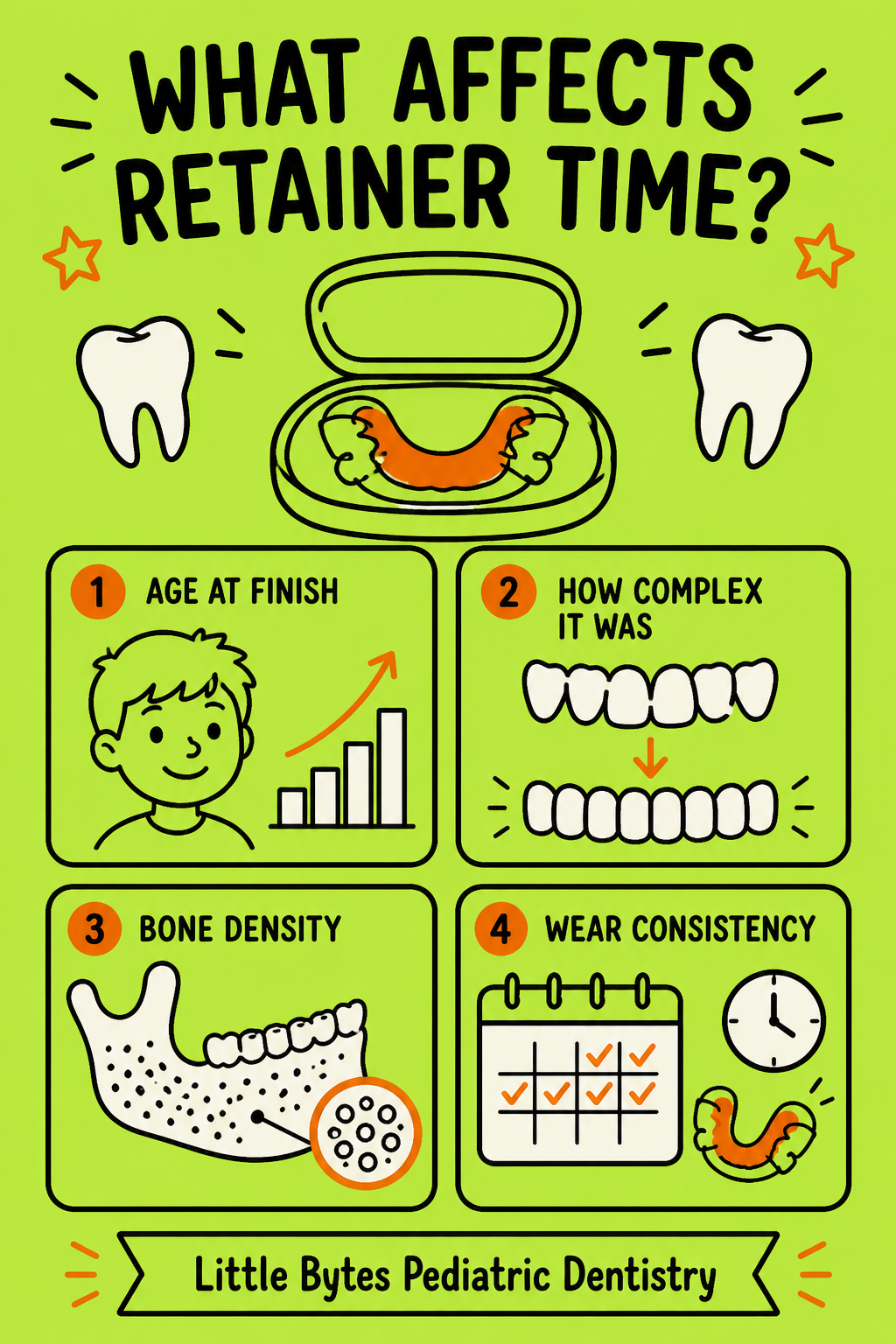
The factors that shape retention requirements include:
- Age at completion: Younger patients whose jaws are still growing may need longer retention periods.
- Initial severity: More complex corrections typically require more vigilant retention.
- Bone density: Teeth in denser bone tend to be more stable after treatment.
- Retainer wear consistency: Regular, consistent wear is the single best predictor of lasting results.
Staying on top of retention is a commitment, but it protects everything your child worked hard to achieve during active treatment.
Is Earlier Treatment Always Better?
Not necessarily. While early intervention, sometimes called Phase 1 orthodontics, can be genuinely beneficial in specific situations, not every child needs it. Phase 1 treatment is typically recommended when there’s a developing skeletal issue, a harmful oral habit, or severe crowding that’s affecting incoming permanent teeth. In these cases, early treatment can actually reduce overall treatment time by correcting jaw position before growth is complete.
For many children, though, a single comprehensive phase of orthodontic care starting around ages 11 to 13 is the more efficient path. Our children’s orthodontic services at Little Bytes include a thorough evaluation that determines whether early intervention is truly beneficial for your child or whether a watchful waiting approach makes more sense. Good preventive dental care throughout childhood also plays a role, since healthy teeth and gums respond better to orthodontic treatment and tend to move more predictably.
Little Bytes Pediatric Dentistry: Straightforward Answers for Every Stage
At Little Bytes Pediatric Dentistry, Dr. Michelle and Dr. Grover are board-certified pediatric dentists with privileges at Lucile Packard Children’s Hospital at Stanford and Kaiser Santa Clara. We’ve built our Palo Alto practice around the kind of thoughtful, transparent care that tech-savvy Bay Area parents expect. No vague timelines, no surprises, just clear guidance tailored to your child’s unique smile.
Whether your child is just approaching that first orthodontic evaluation or you’re already mid-treatment and looking for answers, we’re here to help you navigate every step. Contact our office to schedule a consultation and get a clear picture of your child’s orthodontic timeline.