

Medically reviewed by
Dr. Michelle Haghpanah, DDS, MPH
Board-Certified Pediatric Dentist
Dr. Michelle Haghpanah is a board-certified pediatric dentist dedicated to providing preventive, evidence-based dental care for infants, children, and adolescents. She earned her Doctor of Dental Surgery from New York University, a Master of Public Health from Yale University, and completed her pediatric dental residency at Mount Sinai Medical Center, where she served as Chief Resident. A former Associate Professor at the University of the Pacific with hospital privileges at Lucile Packard Children’s Hospital Stanford and Kaiser Santa Clara, Dr. Michelle reviews clinical content to ensure it reflects current pediatric dental guidelines, evidence-based practices, and clear, family-friendly information that helps parents make informed decisions about their child’s oral health.
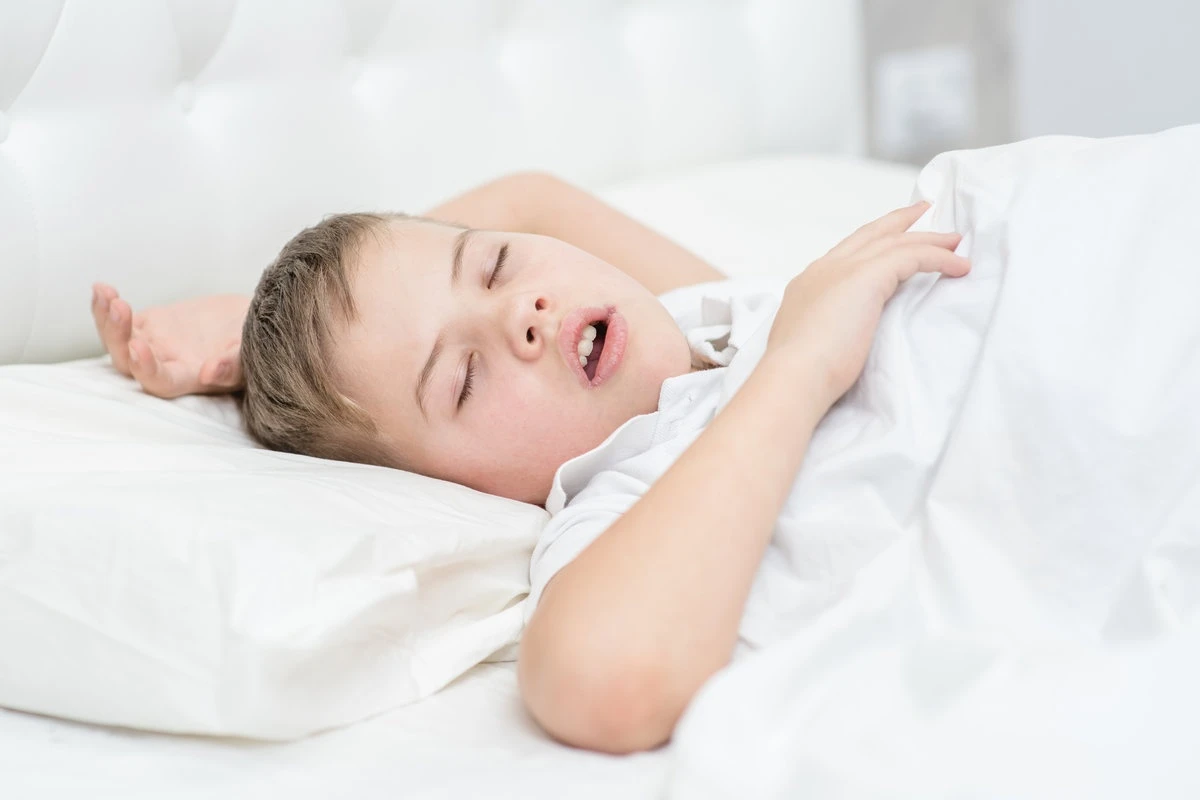
Waking up to the sound of your child snoring might feel like a harmless quirk, but when snoring is persistent, it is often worth a closer look. While it is common for children to snore briefly during a cold or allergy season, regular nightly snoring can signal that the airway is being restricted during sleep. For many families, that sound in the night is not just noise but an indicator that something in the body is working harder than it should be.
At Little Bytes Pediatric Dentistry in Palo Alto, our board-certified pediatric dentists take a whole-child approach to care that includes monitoring how the airway and oral structures develop together. Programs like HealthyStart are designed specifically to address the connection between jaw development and sleep-disordered breathing, giving families a proactive path forward well before problems require more intensive intervention.
What Snoring in Children Can Mean
Snoring in children is one of the most visible signs of sleep-disordered breathing (SDB), a spectrum of conditions ranging from chronic snoring to obstructive sleep apnea. Children with SDB may appear to sleep through the night but still wake up exhausted, struggle to focus at school, or show mood and behavioral changes that seem unrelated to their sleep. The disruption to restful sleep goes deeper than the sound itself.
What many parents do not realize is that the structure of a child’s mouth, jaw, and airway is closely linked to how well they breathe at night. A narrow upper palate, an underdeveloped jaw, or a restricted tongue can all create conditions in which the airway becomes partially blocked during sleep, producing the characteristic snoring sound. These are dental and developmental factors, not just ENT concerns.
The Dental and Jaw Connection
The way a child’s jaw grows during the early years directly affects the space available in the upper airway. Children who breathe primarily through their mouths tend to develop different jaw and facial patterns than those who breathe through their noses, and those differences can compound over time. Mouth breathing during critical growth windows can narrow the dental arches, affect tooth eruption, and reduce the space available for the tongue to rest in a healthy position.
Research published by the National Institutes of Health confirms that mouth breathing and snoring are significant red flags for sleep-related breathing disorders in children, and that dental providers are uniquely positioned to identify and screen for these signs as part of routine care. Early evaluation by pediatric orthodontics can reveal whether structural factors contribute to airway restriction at a stage of development when correction is still highly effective.
Signs That Are Worth Bringing Up
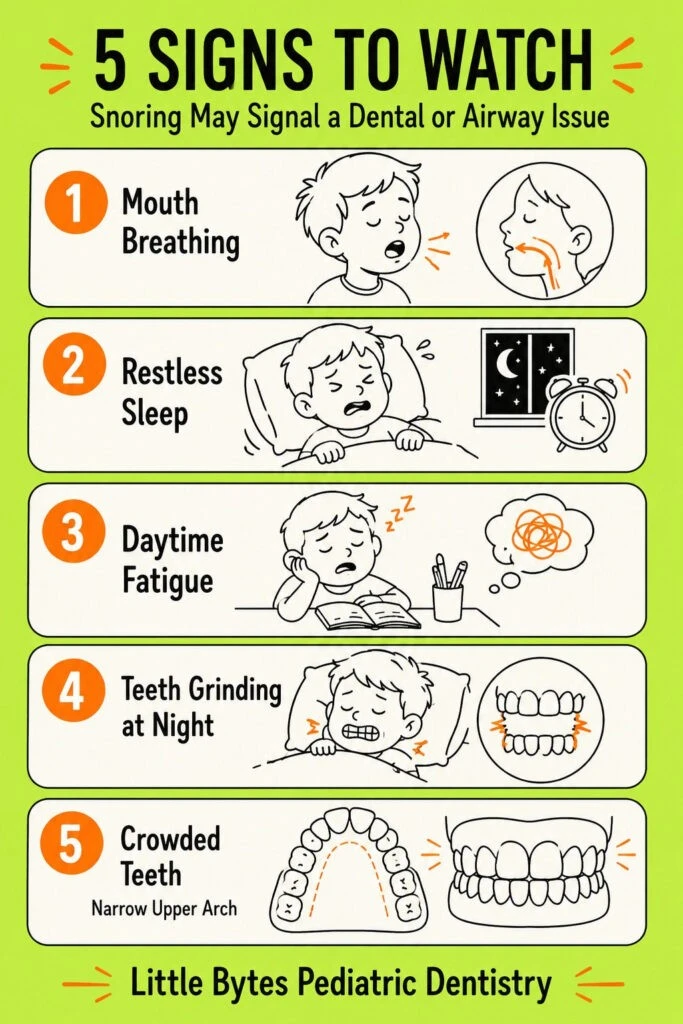
Even if nighttime snoring is the most obvious clue, several daytime patterns can also suggest an airway or dental connection. Common signs worth discussing with a pediatric dentist include the following:
- Breathing through the mouth regularly, even when calm and healthy
- Restless sleep, frequent nighttime waking, or difficulty settling at bedtime
- Daytime fatigue, irritability, or trouble concentrating that seems out of proportion
- Teeth grinding or clenching during sleep
- Crowded or misaligned teeth and a visibly narrow upper arch
Any combination of these signs, alongside regular snoring, warrants a conversation with a professional trained to evaluate airway development, not just tooth health in isolation.
How a Pediatric Dentist Can Help
A pediatric dentist trained in airway-focused care can evaluate the shape of the jaw and dental arches, assess for tongue restriction, and screen for habits that contribute to mouth breathing. Our approach to prevention and education means we consider each child’s overall oral development, not just whether there are cavities to address at the current visit.
When structural factors are identified, options like the HealthyStart program use custom myofunctional appliances worn during sleep to guide the jaw and airway toward healthier development. Habit-breaking appliances can also address oral habits that contribute to mouth breathing and improper jaw positioning. The goal throughout is to support natural growth patterns so that children develop the airway space they need without requiring more complex treatment later on.
Your Child’s Airway Health Starts at Little Bytes Pediatric Dentistry
Dr. Michelle and Dr. Grover are board-certified pediatric dentists who have completed extensive postdoctoral training and hold privileges at Lucile Packard Children’s Hospital at Stanford and Kaiser Santa Clara. Our practice in Palo Alto is equipped with intraoral cameras, digital X-rays, and top-of-the-line sterilization protocols, all delivered in a warm, child-friendly environment where young patients feel comfortable and supported from the moment they arrive.
If your child snores regularly or you have noticed signs of mouth breathing or disrupted sleep, a dental evaluation is a smart first step. Contact our office to schedule an appointment, and let our team help you understand what may be behind your child’s snoring and what early intervention might make possible.